Your skin lives in an eco system.
When we talk about TSW (Topical Steroid Withdrawal) and eczema, the conversation often centers around treatments, diet, supplements, or internal triggers. These are important factors, but they only tell part of the story.
Your skin is not an isolated organ responding only to what happens inside the body.
It is in constant interaction with the world around you. In fact, your skin exists in an environmental ecosystem that is active every single second of the day.
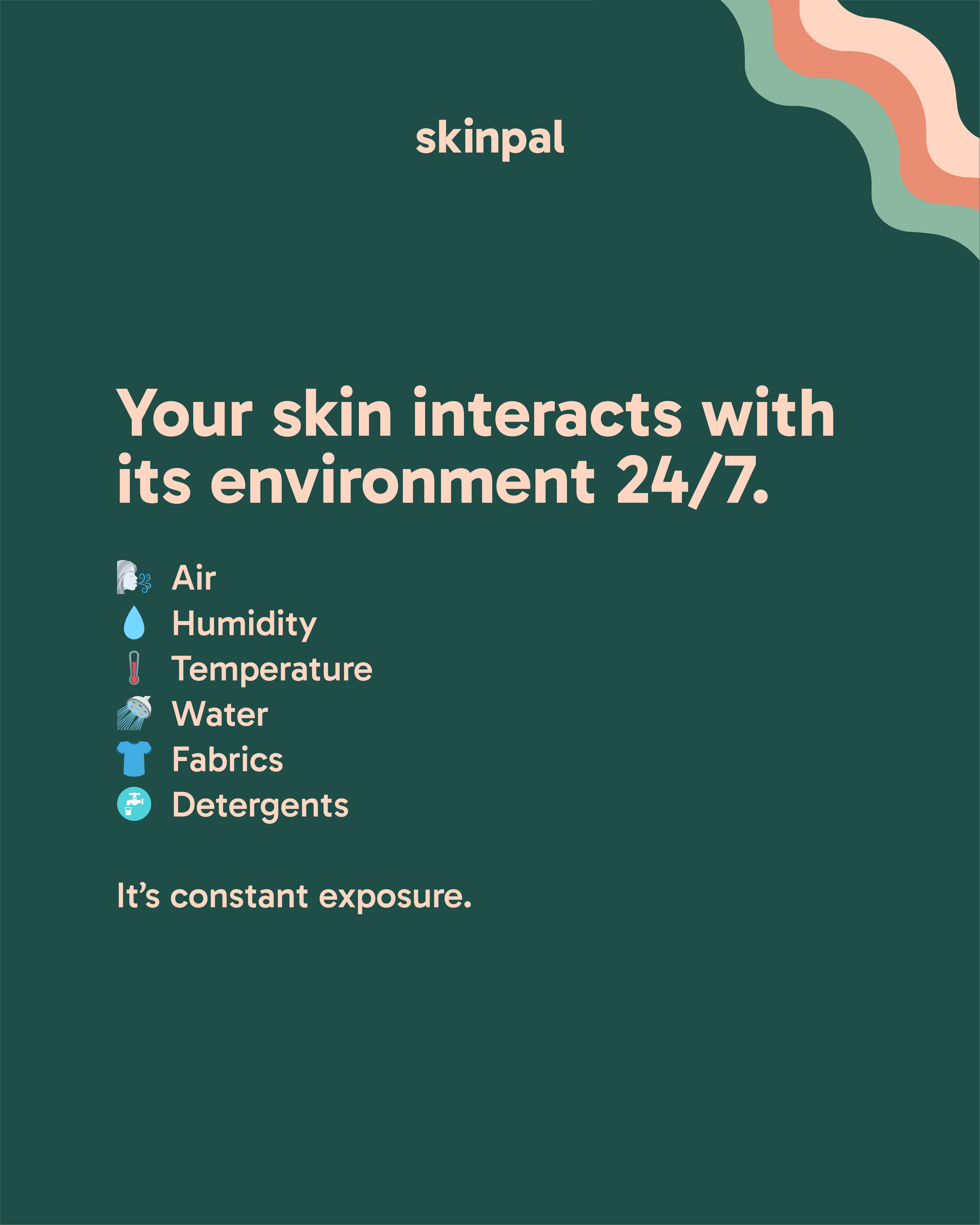
Air quality, humidity, temperature, fabrics, detergents, water, indoor heating, pollution — all of these external factors continuously influence how your skin behaves, feels, and reacts.
For someone with a compromised skin barrier, like in eczema or TSW, this interaction becomes even more significant.
The environment your skin lives in, every day
Your skin barrier has one main job: protection. It acts as a shield between your internal system and the external world.
But that “external world” is not neutral — it is dynamic and constantly changing.
Some of the most common environmental factors include:
Air quality (pollution, allergens, dust)
Humidity levels (dry air vs. humid air)
Temperature changes (cold winters, hot summers, sudden shifts)
Indoor heating and air conditioning
Clothing materials and fabrics
Laundry detergents and fabric softeners
Water quality (especially hard water)
Sweat and friction from movement
Each of these factors interacts with the skin barrier in different ways, often subtly, and sometimes cumulatively.
Why small environmental factors matter more than you think
Individually, these elements might seem minor or insignificant.
Dry air alone may not cause a major flare.
A detergent residue might not be noticeable right away.
A synthetic fabric might only feel slightly irritating.
But skin doesn’t experience them in isolation.
Instead, it responds to the combined load of all environmental stressors throughout the day.
For example:
Dry winter air can weaken the skin barrier and increase transepidermal water loss.
Indoor heating lowers humidity further, amplifying dryness.
Fragranced detergents can leave irritants on clothing that sit against the skin for hours.
Synthetic fabrics can increase friction and trap heat.
Hard water may disrupt the skin’s natural pH and lipid balance.
When layered together, these factors create a continuous environmental pressure on the skin.
When the skin barrier is already compromised
In conditions like eczema or TSW, the skin barrier is already more fragile and reactive than usual.
This means that environmental triggers that would normally be manageable can suddenly become significant stressors.
A slight change in humidity can feel dramatic.
A fabric that was once tolerable may now cause irritation.
Everyday routines — showering, sleeping, getting dressed — can start to influence symptoms.
This is why two people exposed to the same environment can have completely different skin responses. The difference is not just the environment itself, but the state of the skin barrier interacting with it.
Healing is not only internal — it is also environmental
There is a strong focus in skin health on internal healing: gut health, nutrition, stress management, hormones, and immune function. These are all valid and important.
But for many people, especially those with chronic skin conditions, external environment plays an equally important role.
Healing becomes more effective when we start to understand both sides:
What is happening inside the body
And what is happening outside the body
Supporting the skin barrier often requires adjusting not just internal factors, but also the environment it is exposed to daily.
Why tracking environment matters
Most people who track their skin focus on food, symptoms, stress, or sleep. These are valuable data points — but they don’t capture the full picture.
Environment is also data.
Patterns often emerge when environmental factors are tracked consistently:
Symptoms worsening in dry air conditions
Flare-ups after switching detergents
Improvements during travel or climate changes
Reactions to specific fabrics or water exposure
These insights are often subtle, but extremely powerful when identified over time.
Understanding these connections can reduce uncertainty and help people make more informed decisions about daily routines and exposures.
Building clarity through Skinpal
Inside Skinpal, we are working on tools that help connect these environmental and lifestyle patterns in a clearer, more structured way.
The goal is simple:
To help people better understand what their skin is reacting to — not just internally, but externally as well.
Because when there is clarity, there is less guessing.
And when there is less guessing, there is less stress.
And stress itself is also part of the skin ecosystem.