Your skin doesn’t start at your skin.
When we talk about TSW and eczema, most advice focuses on topical creams, skincare routines, and flare control. Moisturise more. Avoid triggers. Repair the barrier. Calm the inflammation.
And while those things absolutely matter, they’re only part of the picture.
Your skin doesn’t function in isolation. It’s deeply connected to what’s happening inside your body — especially in your gut.
What Is the Gut–Skin Connection?
There’s something called the gut–skin connection — the link between your digestive system, immune response, and skin inflammation.
Your gut is home to trillions of bacteria, often referred to as the gut microbiome. These bacteria help regulate:
Immune system activity
Inflammatory responses
Nutrient absorption
Hormone balance
Even mood and stress resilience
Since eczema and TSW (Topical Steroid Withdrawal) involve immune dysregulation and inflammation, it makes sense that what’s happening in your digestive system can influence what’s happening on your skin.
But let’s be very clear about something important:
This does not mean:
🚫 Food is the only cause
🚫 You need extreme elimination diets
🚫 You should fear dairy, gluten, or sugar
🚫 Healing is just about “eating clean”
Skin conditions are complex. There is no single villain.
What the gut–skin connection does suggest is this: patterns matter.
What People Commonly Notice
While every body is different, many people living with eczema or TSW report patterns like:
Flares after significant blood sugar spikes
Increased itching after ultra-processed foods
Slower healing during periods of digestive discomfort
Stress eating during flare cycles
Bloating or gut issues before skin worsening
Increased sensitivity during high-stress periods
The tricky part? These patterns are rarely immediate.
Why It Feels So Random
One of the most frustrating aspects of food-related skin reactions is the delay.
Reactions can show up 24–72 hours later.
You eat something on Monday.
Your skin worsens on Wednesday.
By then, you’ve forgotten what you ate — and it feels completely random.
When you can’t connect cause and effect, everything feels unpredictable. And when it feels unpredictable, it feels overwhelming.
That overwhelm increases stress.
And stress, in turn, can worsen inflammation.
It becomes a cycle.
This Isn’t About Restriction — It’s About Awareness
Tracking isn’t about control. It’s not about creating fear around food. It’s not about obsessing over every bite.
It’s about awareness.
When you can gently track:
Food
Stress levels
Sleep quality
Mood
Symptoms
You start to see trends instead of chaos.
Maybe it’s not dairy at all — maybe it’s lack of sleep.
Maybe it’s not sugar — maybe it’s cumulative stress.
Maybe it’s not a single food — but a combination of stress + poor sleep + high-sugar meals.
Understanding your personal patterns helps you move from guessing to informed decision-making.
And that shift alone can reduce anxiety around flares.
Why Stress Still Matters
The gut and brain are connected through the gut–brain axis. When stress rises, digestion changes. Inflammation can increase. The skin can react.
So even if food plays a role, it’s rarely acting alone.
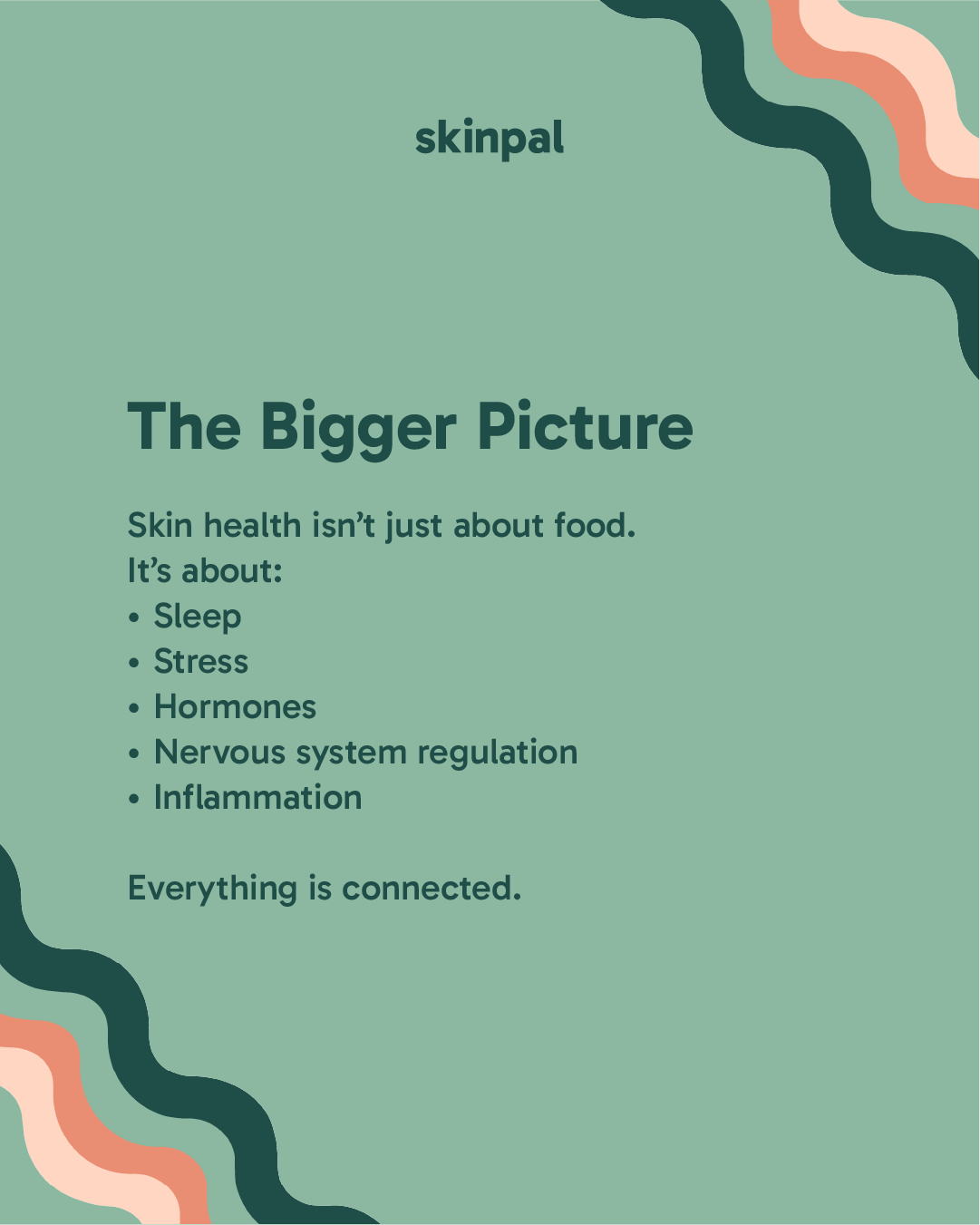
That’s why looking at the full ecosystem — not just ingredients — is so important.
Seeing the Full Picture
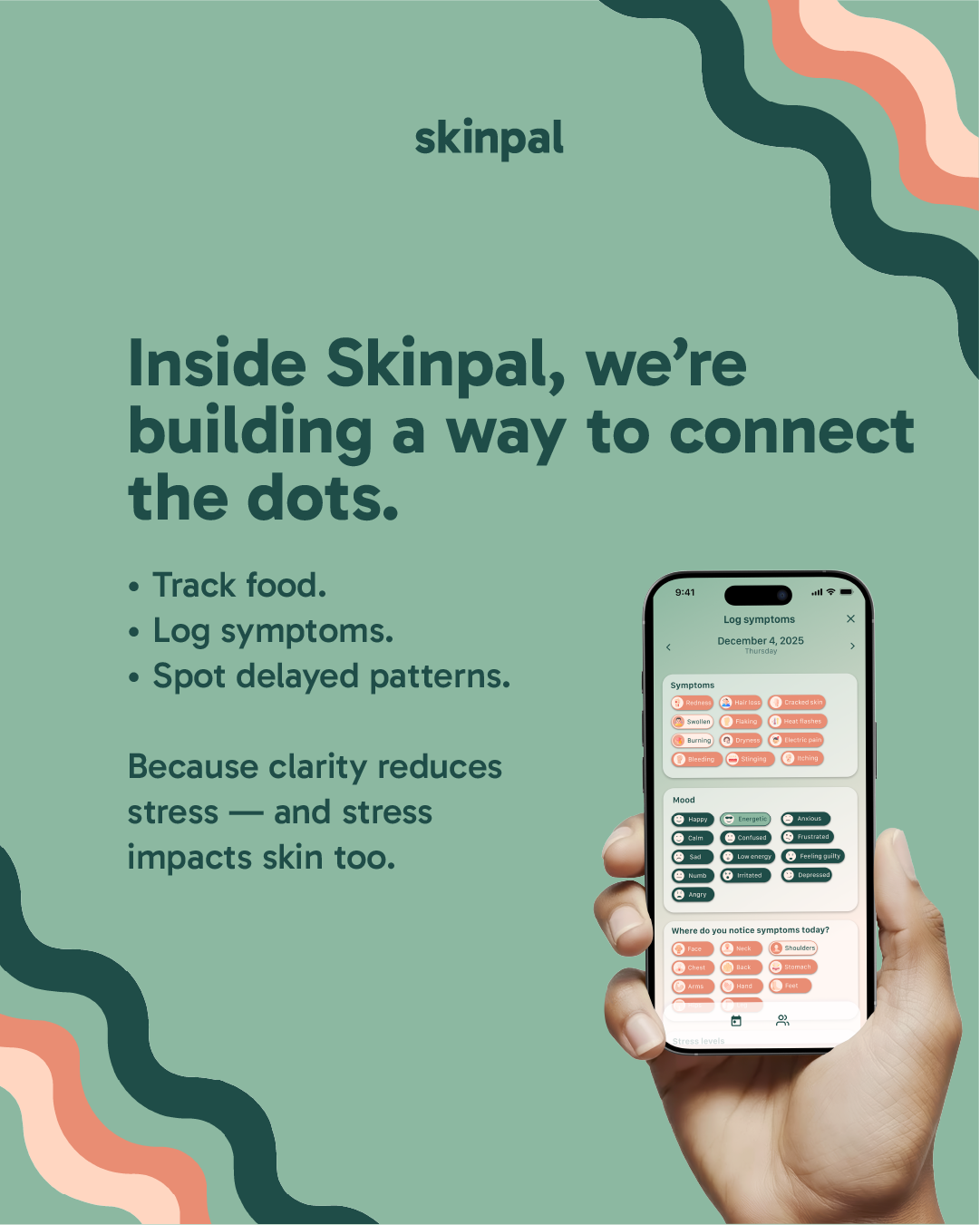
Inside Skinpal, we’re building tools to help you see the connections between:
Food
Stress
Sleep
Mood
Skin symptoms
Because clarity reduces stress. And reduced stress supports healing.
The goal isn’t perfection. It’s understanding.
Your skin is not random. Your body is communicating.
Sometimes, we just need better tools to listen.