
The Hidden Workload of Managing a Skin Condition
When people think about eczema or topical steroid withdrawal (TSW), they usually picture the visible symptoms.
Redness.
Dryness.
Inflammation.
But what often goes unnoticed is the constant, behind-the-scenes effort required to manage it.
For many people, living with a chronic skin condition isn’t just about treating symptoms — it’s about navigating a continuous stream of decisions, observations, and adjustments. Over time, this can feel less like a routine… and more like a second job.
It’s Not Just Physical — It’s Mental
Managing eczema or TSW involves a level of awareness that extends far beyond the skin itself.
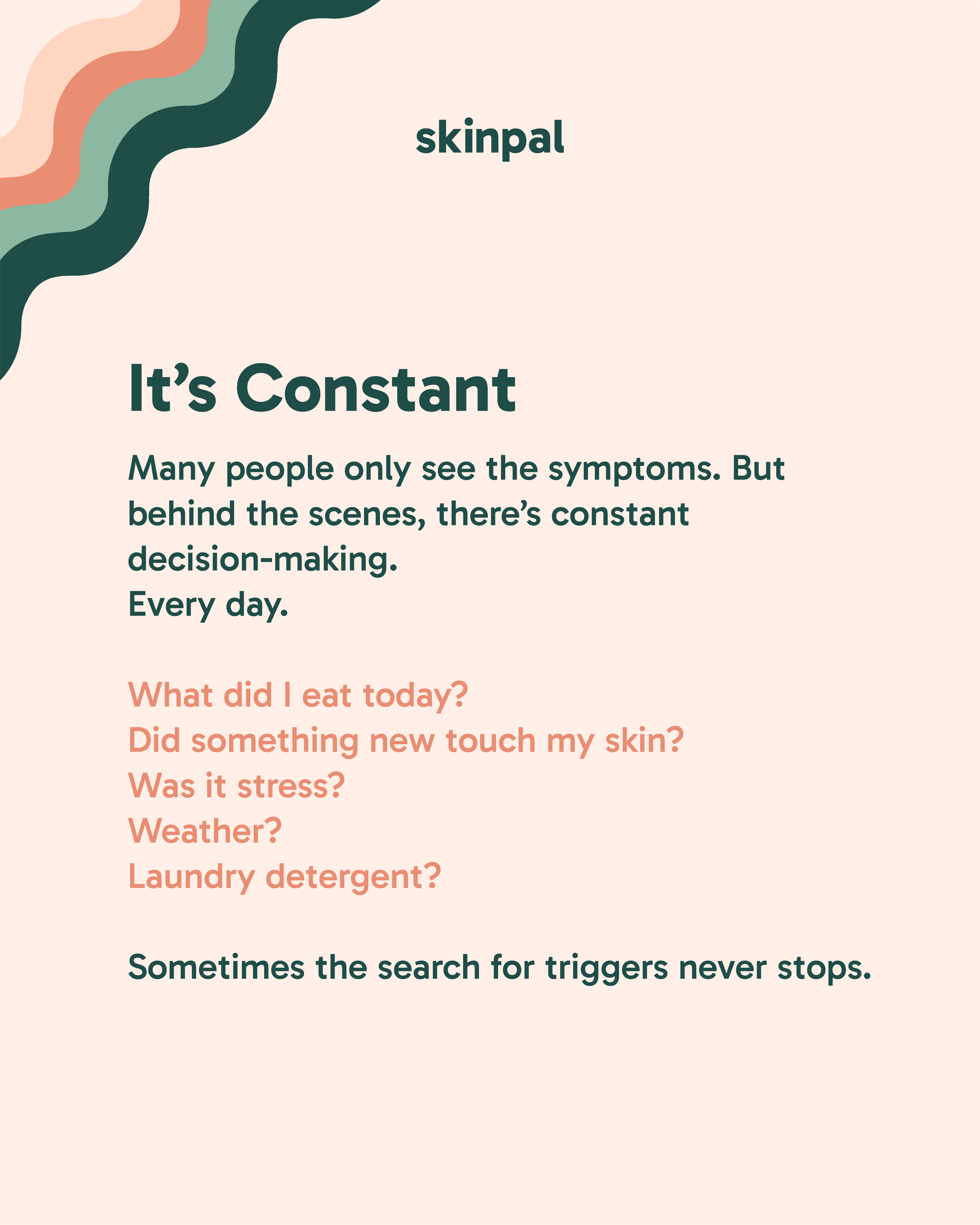
Throughout the day, there is often an ongoing internal dialogue:
What triggered this flare?
Was it something I ate?
Is it stress? Lack of sleep? The weather?
Did I try a new product?
These questions don’t come up once — they repeat daily.
And without clear answers, they can become mentally exhausting.
Constantly Checking and Evaluating
Simple, everyday choices can require extra effort.
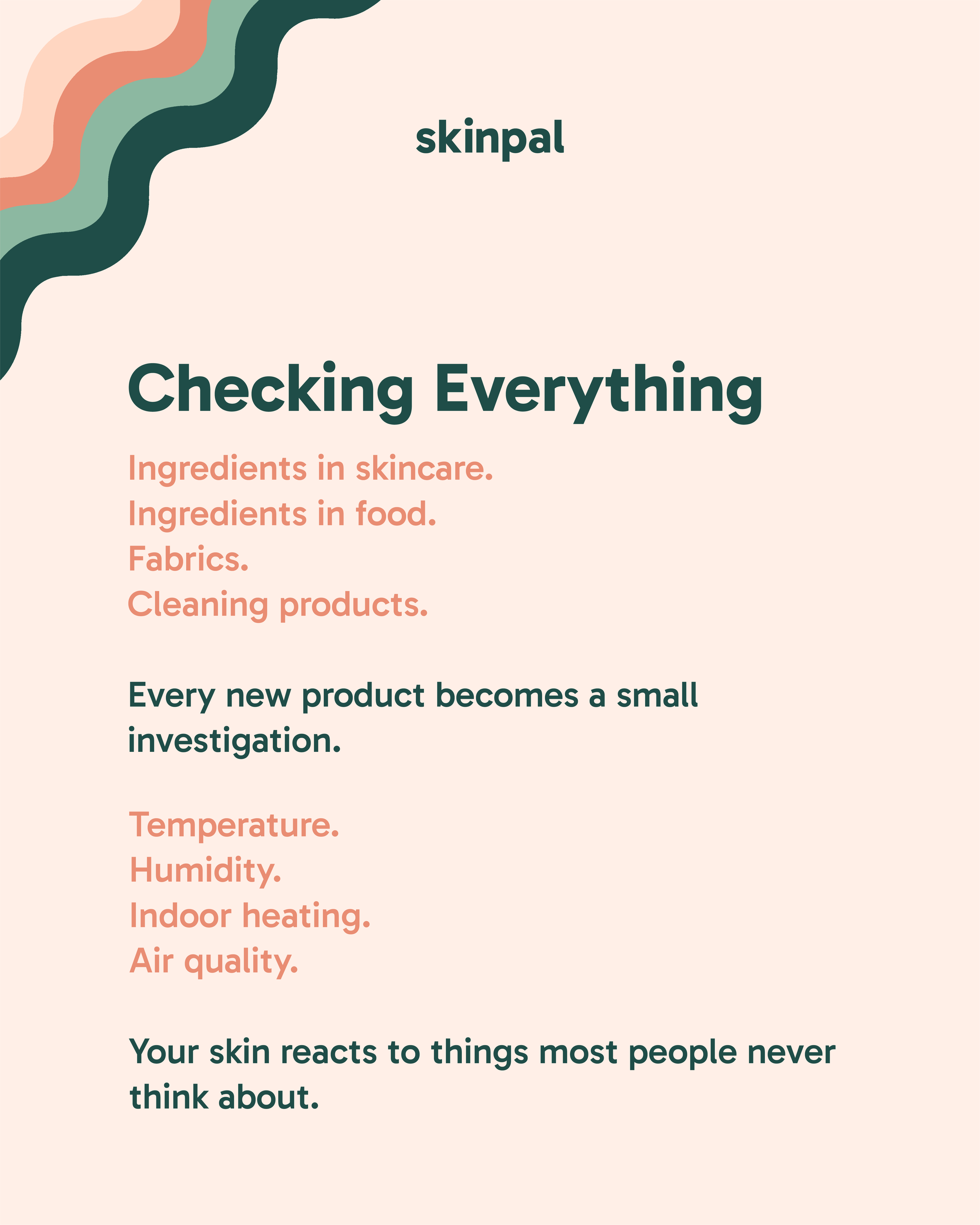
Ingredients in skincare products need to be reviewed carefully.
Food labels may need to be checked for potential triggers.
Fabrics, detergents, and cleaning products can all become variables to consider.
Things that are automatic for most people often become deliberate decisions.
Over time, this creates a constant layer of analysis — small on its own, but significant when repeated every day.
Monitoring the Environment
Skin doesn’t exist in isolation. It reacts to the environment around it.
Changes in temperature, humidity, indoor heating, or air quality can all influence how skin behaves.
For someone managing a chronic skin condition, this often means paying attention to factors that others may never think about.
A slight shift in weather or environment can sometimes mean the difference between a manageable day and a difficult one.
Planning Daily Life Around Your Skin
Daily routines are often adjusted with skin in mind.
Sleep becomes a priority — not just for rest, but for recovery.
Stress levels are monitored because of their impact on flare-ups.
Clothing choices may be based on comfort rather than preference.
Plans can shift depending on how the skin feels that day.
These adjustments can be subtle, but they shape everyday life in meaningful ways.
The Invisible Mental Load
What makes this especially challenging is that much of it is invisible.
From the outside, people may only see the physical symptoms.
They don’t see the planning, the tracking, the decision-making, or the emotional weight behind it.
This mental load can build up over time — leading to frustration, fatigue, and a feeling of being constantly “on alert.”
Why Awareness and Tracking Matter
When so many factors are involved, it can be difficult to make sense of what’s actually helping — and what isn’t. This is where tracking can make a difference.
By consistently logging symptoms, mood, sleep, food, and daily experiences, patterns can start to emerge over time. Instead of relying on memory or guesswork, people can begin to see clearer connections between triggers and reactions.
And with that clarity, managing skin can become more structured — and less overwhelming. Living with eczema or TSW often means becoming highly aware of your body and environment.
But without the right tools, that awareness can feel scattered and difficult to act on.
Turning daily experiences into structured insights can help shift the experience from constant guessing to informed decision-making. Because while managing a skin condition may always require effort, understanding it better can make that effort feel more manageable.
