
The Trauma of the Mirror: Why We Stop Looking at Ourselves (And How to Find Your Way Back)
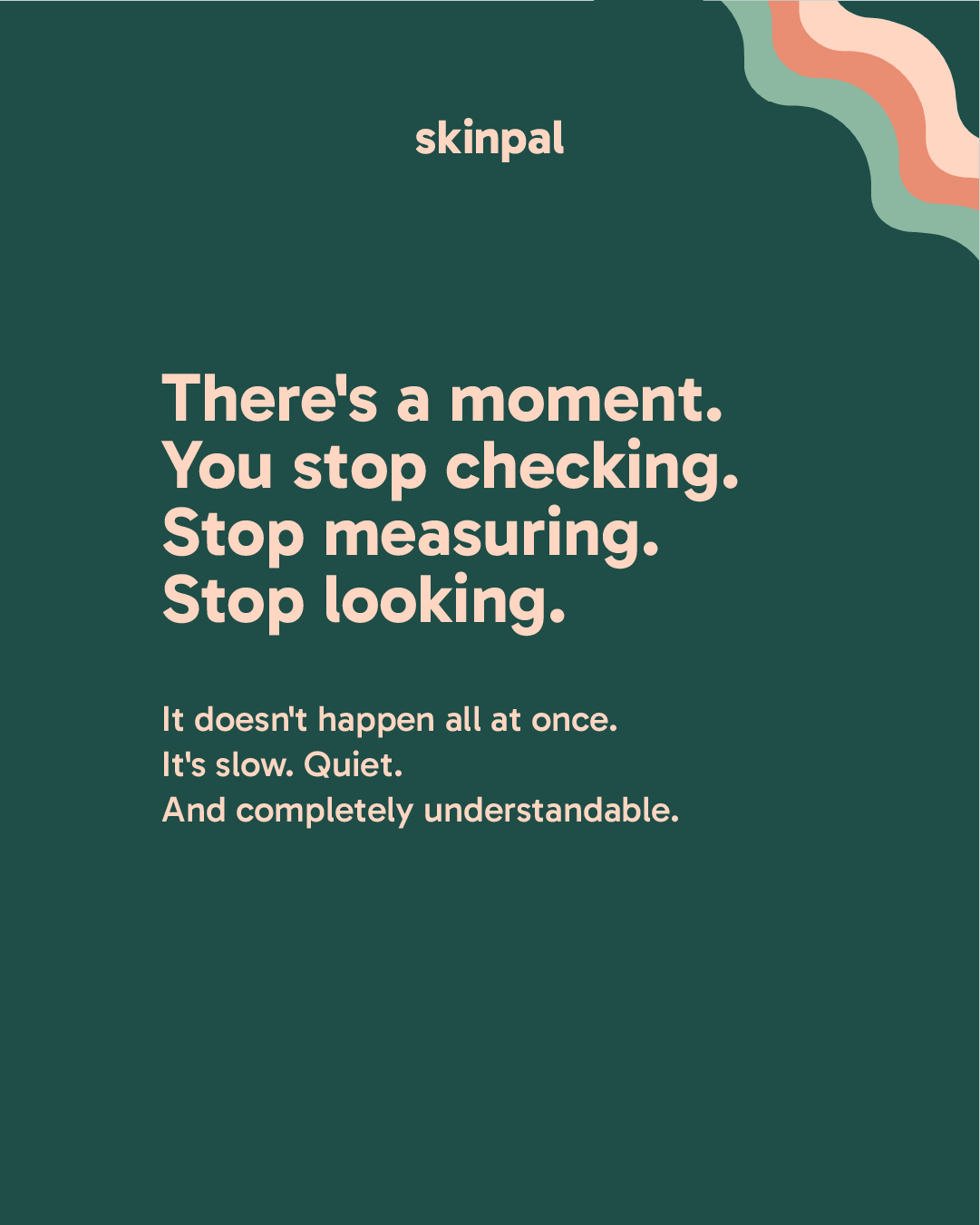
You stopped looking in the mirror. Not because you forgot — because it hurt.
Maybe it happened gradually. You started angling past the bathroom mirror in the morning. Skipping the full-length one before you left the house. Looking just long enough to check your hair, your face — nothing below the neck, nothing too long, nothing too honest.
Or maybe you remember the exact moment. A bad flare. A number on a scale. A photo someone took that didn't look like the person you still felt like inside.
Either way, you stopped. And if no one has ever said this to you plainly: that makes complete sense.
When the mirror becomes a confrontation
For most of us, the mirror is supposed to be neutral. A tool. You look, you see, you move on.
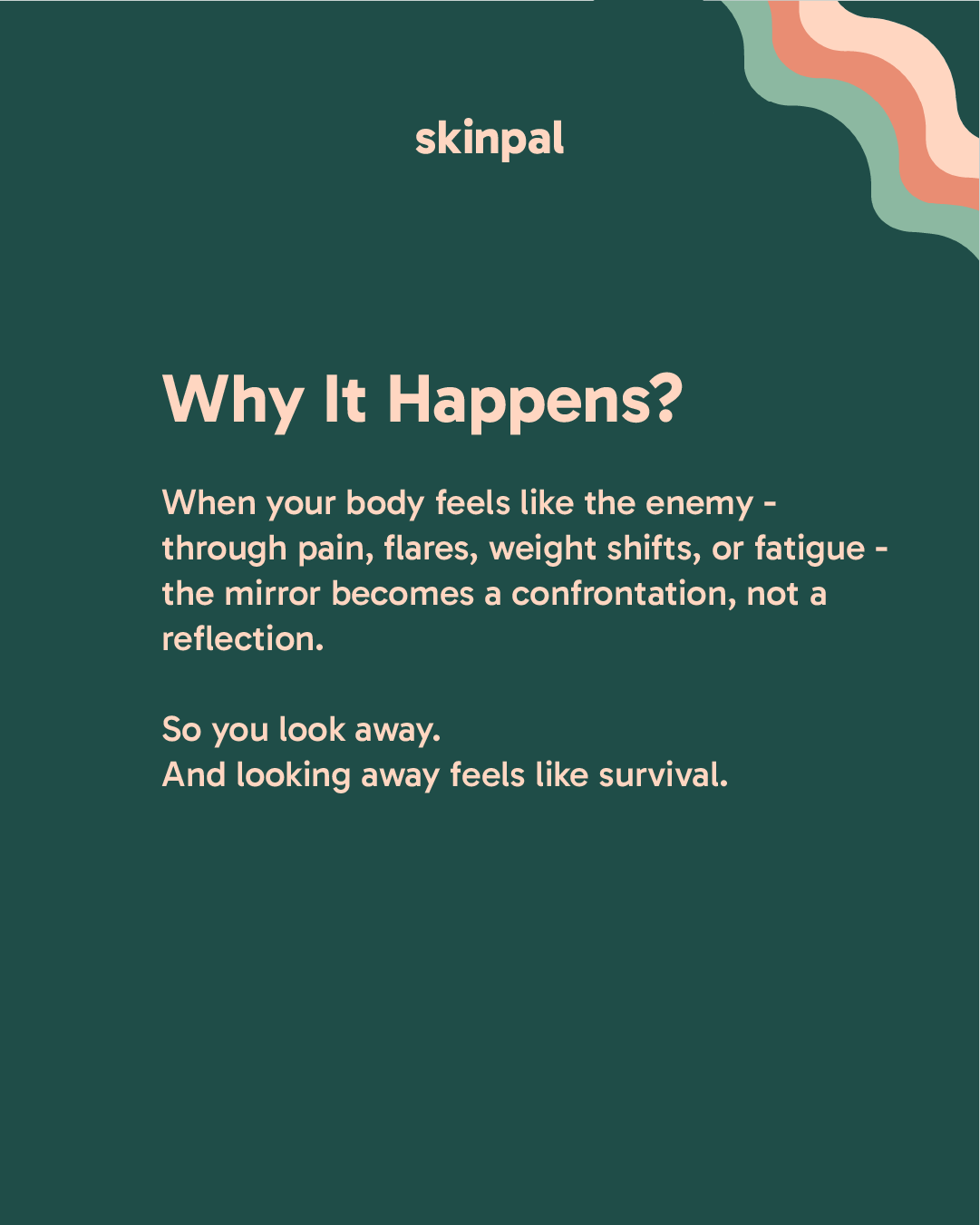
But when your body has been through something — chronic illness, pain, weight changes, fatigue that rewrites your face — the mirror stops being neutral. It becomes a place where you go to be reminded of everything that feels wrong. Every flare. Every lost month. Every version of yourself you're grieving.
So avoidance kicks in. And avoidance, at first, feels like self-protection. You're not being vain or shallow or in denial. You're just trying to get through the day without being ambushed by your own reflection.
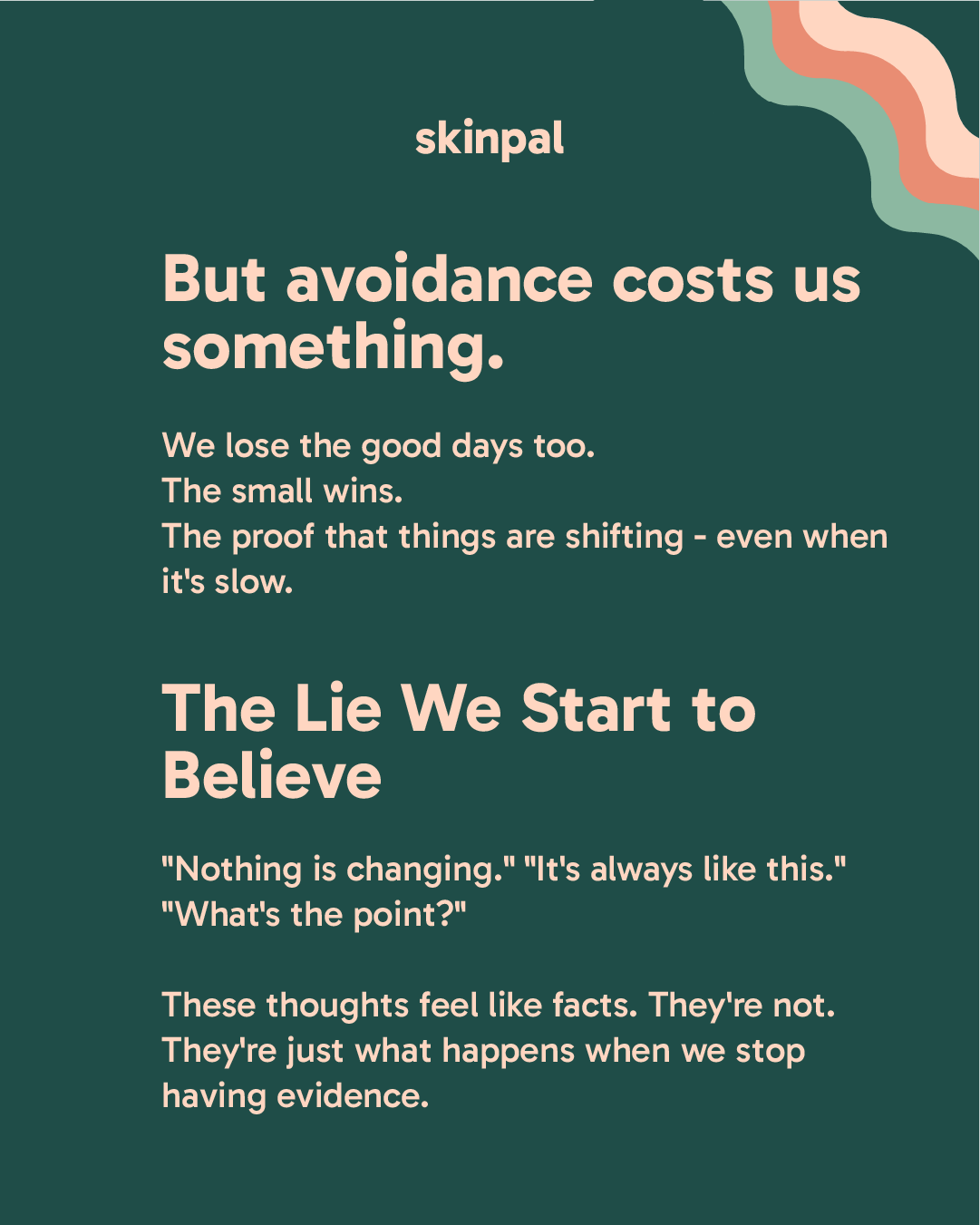
The problem is what happens next.
What we lose when we look Away
One of the most exhausting parts of TSW and eczema isn't just the physical toll — it's the disorientation. The feeling of being at the mercy of something unpredictable. Of never quite knowing what's coming or why.
Progress, in the invisible sense, is the gradual erosion of that helplessness.
It's the moment you realise you can anticipate a flare rather than just survive it. When you stop feeling like a passenger in your own skin and start feeling like someone with a growing map — still incomplete, still uncertain in places, but yours.
That shift from reacting to responding with intention is not a small thing. It doesn't happen overnight, and it's easy to miss when you're in the middle of it. But it quietly changes the texture of every single day.
The Habit That Changes Everything
Here's what nobody tells you about self-tracking: it isn't really about data.
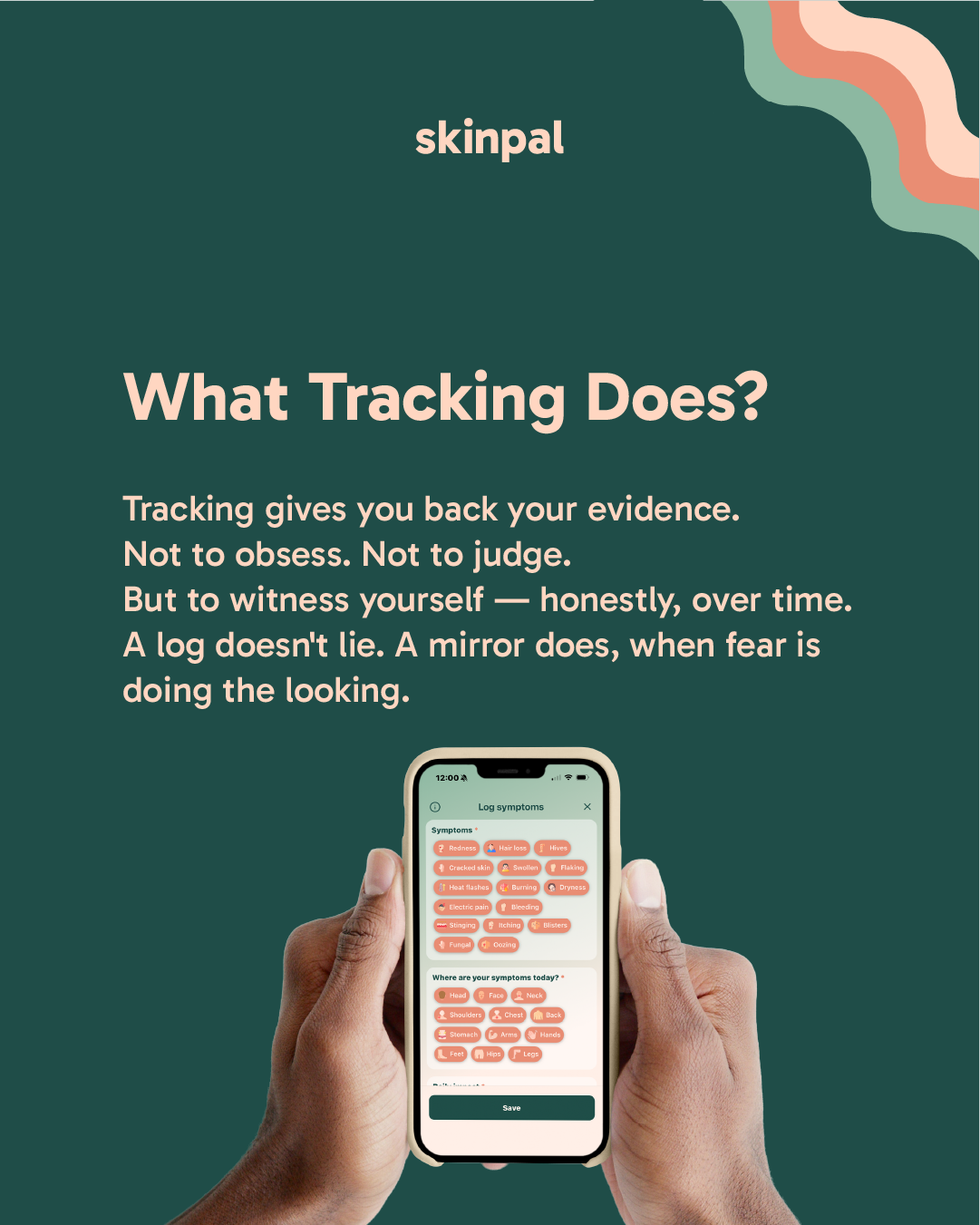
Yes, logging your symptoms, your energy, your pain levels — that information is useful. It helps you and your care team understand patterns. It can predict flares before they hit. It connects the dots between lifestyle and how you feel.
But the deeper thing it does is give you back your own story.
When you open an app and log how you feel today — honestly, without judgment — you're doing something radical. You're looking. Not in a mirror that catches you off guard, but in a record that holds context. That remembers the bad weeks and the better ones. That can show you, in black and white, that three months ago you could barely get off the couch and today you made it through a full afternoon.
A log doesn't distort the way fear does. It just holds the truth.
Learning to Witness Yourself Again
There's a difference between looking at yourself and witnessing yourself.
Looking is passive. It's the glance in the mirror that confirms your worst suspicions before you've even had your coffee.
Witnessing is something else. It's the act of seeing yourself over time — with honesty, with patience, with the understanding that a single moment is never the whole picture. It's scrolling back through weeks of your own data and recognizing: I kept going. Even on the days I didn't think I could.
That's not a small thing. That's everything.
You Deserve to See Yourself Clearly
If you've been avoiding your reflection — in mirrors, in photos, in honest conversations about how your body is doing — this is your permission to start small.
Not to fix anything. Not to judge what you find. Just to begin looking again.
One log. One day. One honest note about how you actually feel.
Over time, those notes become a record. That record becomes evidence. And that evidence becomes something you can hold onto on the days when your mind wants to convince you that nothing is working and nothing will ever change.
You've been through something hard. Your body has carried a weight that most people can't see. The least you can do — for yourself — is bear witness to that. To all of it. The struggle and the progress, the bad weeks and the quietly better ones.
You deserve to see yourself clearly. Not through a mirror caught in a bad moment — but through the full, honest, complicated picture of who you are and how far you've come.
